BackExportPolishCreate Draft
Stationary Bikes: Ultimate Guide to Choosing and Using the Best Models
Stationary bikes let you get a solid cardio workout indoors with minimal setup and year-round consistency. They range from simple upright models that mimic road cycling to heavy-duty smart bikes that pair with apps and offer structured training; most aim to deliver low-impact cardio, calorie burn, and convenient interval sessions for riders of varying fitness levels.
Choosing the right stationary bike comes down to ride feel, resistance system, and adjustability—flywheel weight and magnetic or friction resistance determine smoothness and intensity, while seat and handlebar fit affect comfort over longer rides. We tested a range of upright and spin-style stationary bikes to identify models that balance stable construction, realistic pedaling feel, and straightforward connectivity for training apps.
Best Stationary Bikes
Below is our curated list of the best stationary bikes for home and gym use, selected for build quality, ride feel, and value. We tested options for beginners to advanced cyclists so you can find the bike that fits your training goals and space.
MERACH Exercise Bike
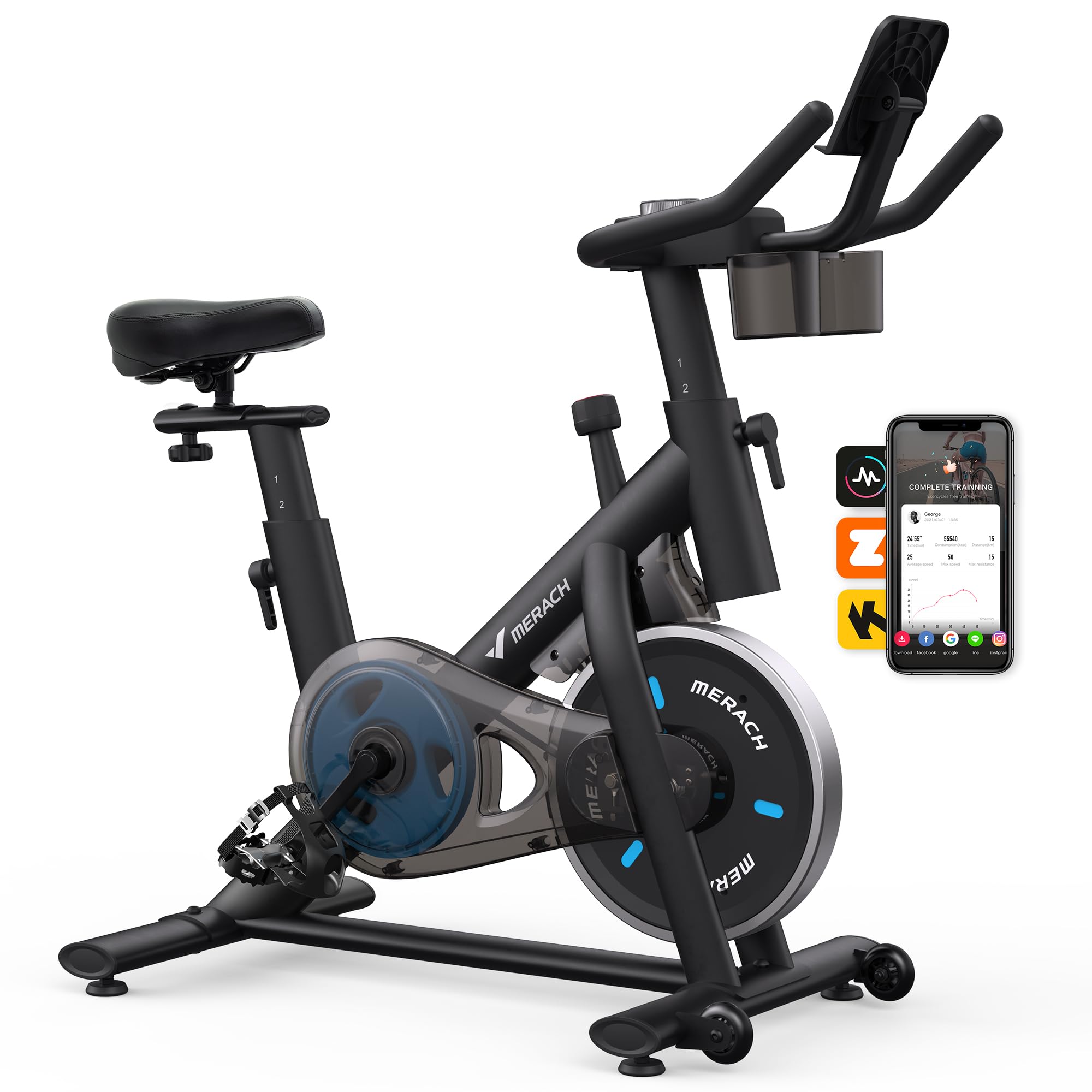
We recommend this bike if you want a quiet, sturdy home trainer with app connectivity at a mid-range price.
Pros
- Very quiet belt drive that lets us ride early or late without bothering others.
- Stable, heavy-feeling frame that stays rock-solid during hard efforts.
- App and third‑party compatibility (KINOMAP, Zwift) that keeps workouts varied.
Cons
- Display and electronics feel basic compared with higher-end consoles.
- Seat padding and stock handlebars may require aftermarket upgrades for long rides.
- Setup is mostly complete but still needs a 30-minute assembly and some fiddling.
We rode the MERACH for a few weeks and appreciated how whisper-quiet the belt drive is; it made interval days tolerable at 6 a.m. and late-night recovery rides easy. The resistance range gives plenty of challenge, and the knob adjusts smoothly when we wanted to ramp intensity quickly.
The bike’s frame feels very solid under sprinting and seated climbs, and the transport wheels make it simple to move into a corner when not in use. The multi-position seat and handlebar adjustments fit several of us comfortably, though taller riders should double-check fit before buying.
App pairing worked reliably on our phones and connected to Zwift during a test ride, which kept things engaging. The LED monitor provides useful real-time metrics, but we noticed it lacks the polish and features of pricier displays; we used a tablet for guided sessions most of the time.
Overall, this MERACH strikes a practical balance between noise control, build quality, and smart features; it feels like a real home-studio bike at a reachable price.
Schwinn IC4

We recommend this bike if you want a sturdy, app-friendly indoor cycle that feels like a studio ride without the studio price.
Pros
- Smooth, quiet magnetic resistance with fine adjustments.
- Solid, stable frame that feels durable during hard efforts.
- Good app compatibility for Peloton, Zwift, and JRNY.
Cons
- Console is basic compared with integrated touchscreen bikes.
- Power cord setup and connectivity can take a few tries.
- Seat and handlebars may need swapping for long rides.
We hopped on this bike for multiple rides and noticed the flywheel feels balanced and near-silent. The 100 micro-adjustable resistance levels let us nudge effort precisely during intervals, and the dual-sided pedals worked fine for casual shoes or clipped shoes when we wanted a more aggressive cadence.
Assembly took an afternoon with two of us moving parts around; once set up the frame felt rock-solid under heavy standing climbs. The small console gives the essentials—speed, cadence, time and calories—but we relied on our tablet and apps for immersive courses and metrics.
App pairing worked after a few attempts; once connected the ride experience opened up with Zwift and other platforms we tested. We swapped the seat for a comfort option on long rides, but otherwise the bike handled daily sessions without squeaks or wobble.
WELLG Indoor Cycling Bike
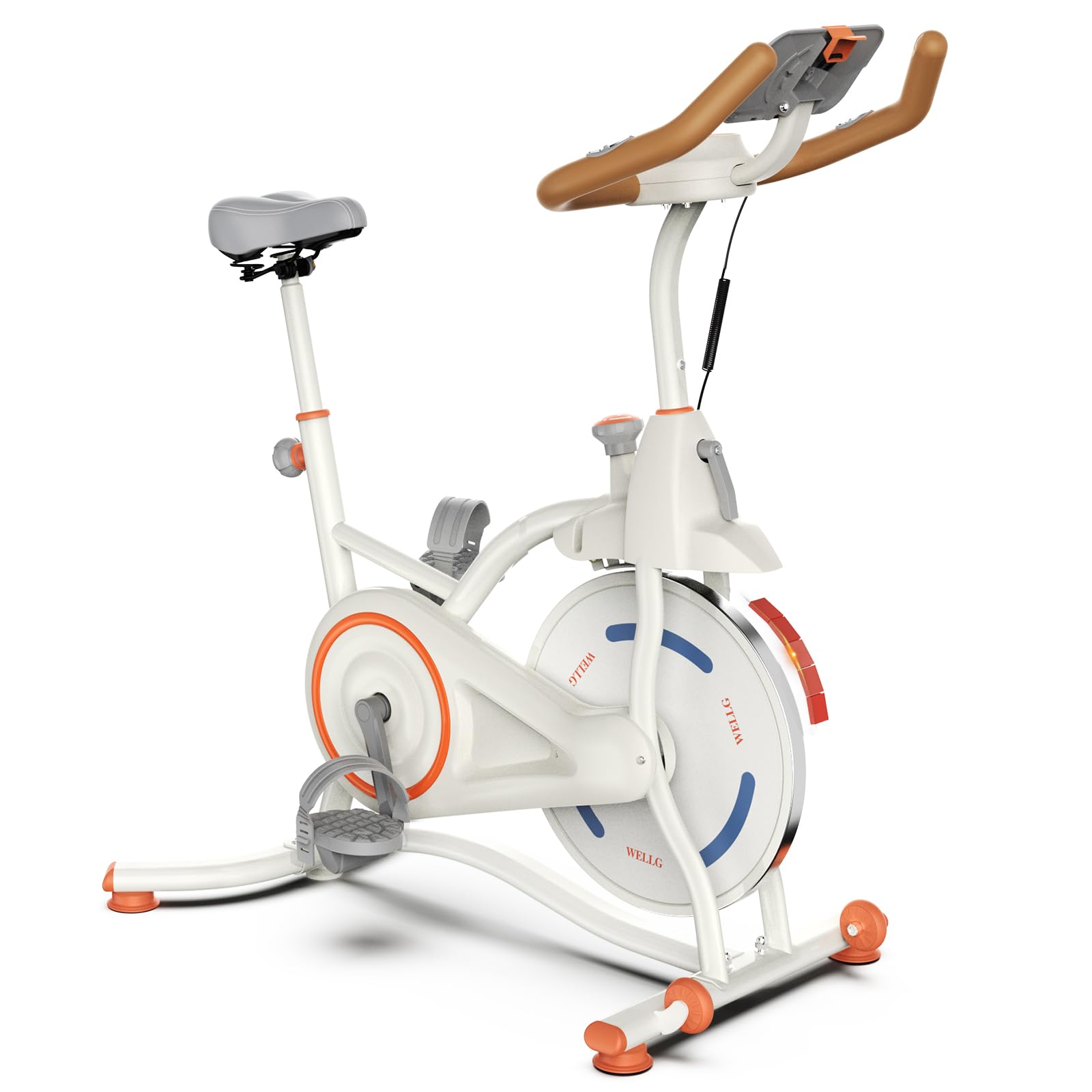
We recommend this bike if you want a quiet, solid-feeling indoor cycle that tracks heart rate and holds a phone for streaming classes.
Pros
- Quiet, smooth ride that lets us train late without disturbing others
- Stable steel frame with a comfortable padded seat for longer sessions
- Integrated heart-rate sensors and device holder make following workouts easy
Cons
- Seat feels basic and may need upgrading for very long rides
- Console is functional but not as polished as high-end studio bikes
- Height limit under 6’2″ may be restrictive for taller users
We set this up in the living room and noticed the build felt surprisingly sturdy for the price. The bike stayed rock-steady during interval efforts and the magnetic resistance adjusted smoothly as we ramped intensity.
Using the leather-grip heart-rate sensors provided consistent readings for steady-state and tempo efforts. We liked the phone strap and device holder; streaming a class was simple and the console displayed the key metrics without clutter.
Battery-powered electronics kept things simple and quiet, though the console lacks advanced connectivity out of the box. The seat proved comfortable for typical workouts, but we would swap it if we planned multi-hour rides.
Overall, this WELLG bike blends solid construction, useful tracking, and noise-free operation, making it a practical choice for most home cyclists.
YOSUDA Exercise Bike

We recommend this bike if you want a quiet, stable home spinner with wide resistance range for both gentle cardio and tougher interval sessions.
Pros
- Very quiet belt-and-magnet drive that won’t bother others.
- Solid, stable frame that stays put during standing sprints.
- Smooth, stepless resistance lets us dial intensity precisely.
Cons
- Assembly feels heavy; two people help for lifting big parts.
- Saddle comfort requires adjustment or an aftermarket seat for long rides.
- Tablet holder and app support are basic compared with premium units.
We put this bike through multiple short HIIT rounds and longer steady rides to test the feel. The 30 lb flywheel delivers a realistic pedal momentum and the magnetic braking gives seamless resistance changes as we ramp up or back off.
Noise stayed below conversational levels; we could watch shows with the TV at normal volume without hearing mechanical whine. The belt drive and the claimed quiet magnets translate to real-world silence that’s useful in apartments or shared rooms.
Frame rigidity impressed us—there’s no shimmy when we stand and press hard, and the adjustable stabilizers keep it level on slightly uneven floors. The heavy parts make initial setup fiddly, though; the online video helped speed assembly but moving the base solo is awkward.
Seat and handle adjustments cover a broad height range, yet the stock saddle got uncomfortable on rides longer than 45 minutes for some of us. Swapping to a more padded or ergonomic saddle improved comfort immediately.
Overall, this offers strong value for a home training bike: quiet operation, dependable stability, and finely tunable resistance without the premium price tag. Check the latest price and full specs on Amazon: YOSUDA Exercise Bike.
XVGVSV W239 Recumbent Bike

We recommend this bike if you want a quiet, stable recumbent option that fits multiple users and supports heavier riders.
Pros
- Plush seat and supportive backrest that actually make longer sessions comfortable.
- Very quiet magnetic resistance with a solid, sturdy frame.
- Easy to move and mostly pre-assembled for quick setup.
Cons
- Seat padding could use an extra cushion for some users.
- Assembly can take longer than the advertised 30 minutes if you follow every step.
- Console is functional but basic compared with smart-bike apps.
We tested this bike over several weeks and found the ride impressively smooth and whisper-quiet. The magnetic resistance steps through 16 levels predictably, so we could shift from light rehab pacing to a steady cardio push without fuss.
The seat adjustment slides easily and the backrest holds a comfortable posture during longer sessions. We added a thin pad on the saddle and noticed a measurable comfort improvement for rides over 30 minutes.
Transport wheels made it simple to move around our living room, and the frame felt solid when we pushed harder; the bike doesn’t wobble under heavier loads. The pulse sensors and LCD provided the basic metrics we needed for tracking progress, though power users may miss app connectivity.
Overall, this recumbent bike works well for older adults, anyone rehabbing joints, or households that need a durable, quiet machine that multiple people can use. XVGVSV W239 Recumbent Bike
Buying Guide
We recommend starting with your goals. Decide whether you want low-impact cardio, interval training, or rehab use; the intended use guides resistance type, console features, and durability.
We check resistance systems first. Magnetic offers quiet, smooth changes and low maintenance. Friction is cheaper but noisy and requires pad replacement. Look for discrete resistance levels and a wide range.
We evaluate fit and adjustability. Ensure the saddle and handlebars adjust vertically and horizontally to fit our height and riding style. Confirm step-through height and clearances for safe mounting and dismounting.
We inspect drive train and pedals. Belt drives need less maintenance and run quieter than chains. Pedals should accept straps or clips; check max user weight and crank solidity.
We examine console and connectivity. Basic displays show time, distance, speed, and calories. More advanced consoles add heart-rate input, workout programs, and Bluetooth or app pairing. Prioritize interfaces that sync with our phone or training apps.
We consider size and storage. Measure floor space and doorway clearance before buying. Folding models save space but may compromise stability for intense workouts.
We compare warranty and support. A longer frame warranty indicates expected durability. Check parts and labor coverage and availability of customer support.
We balance price vs. features. Identify must-have features and where we can compromise. Use a simple comparison table to weigh resistance, adjustability, connectivity, and warranty.
| Feature | What to look for |
|---|---|
| Resistance Type | Magnetic for quiet/smooth; friction for low cost |
| Adjustability | Vertical/horizontal saddle & handlebar range |
| Drive | Belt for low maintenance; chain for lower price |
| Console | Heart-rate, programs, Bluetooth/app pairing |
| Size/Weight Limit | Suitable footprint and user weight capacity |
| Warranty | Longer frame and parts coverage preferable |