Homemade yogurt has a loyal following among people who want more say over what ends up in their bowl, and the Ultimate Probiotic Yogurt Maker is built specifically for that crowd. It’s designed around longer fermentation windows and specialty starter cultures like L. reuteri and L. gasseri, which regular yogurt makers often can’t handle.
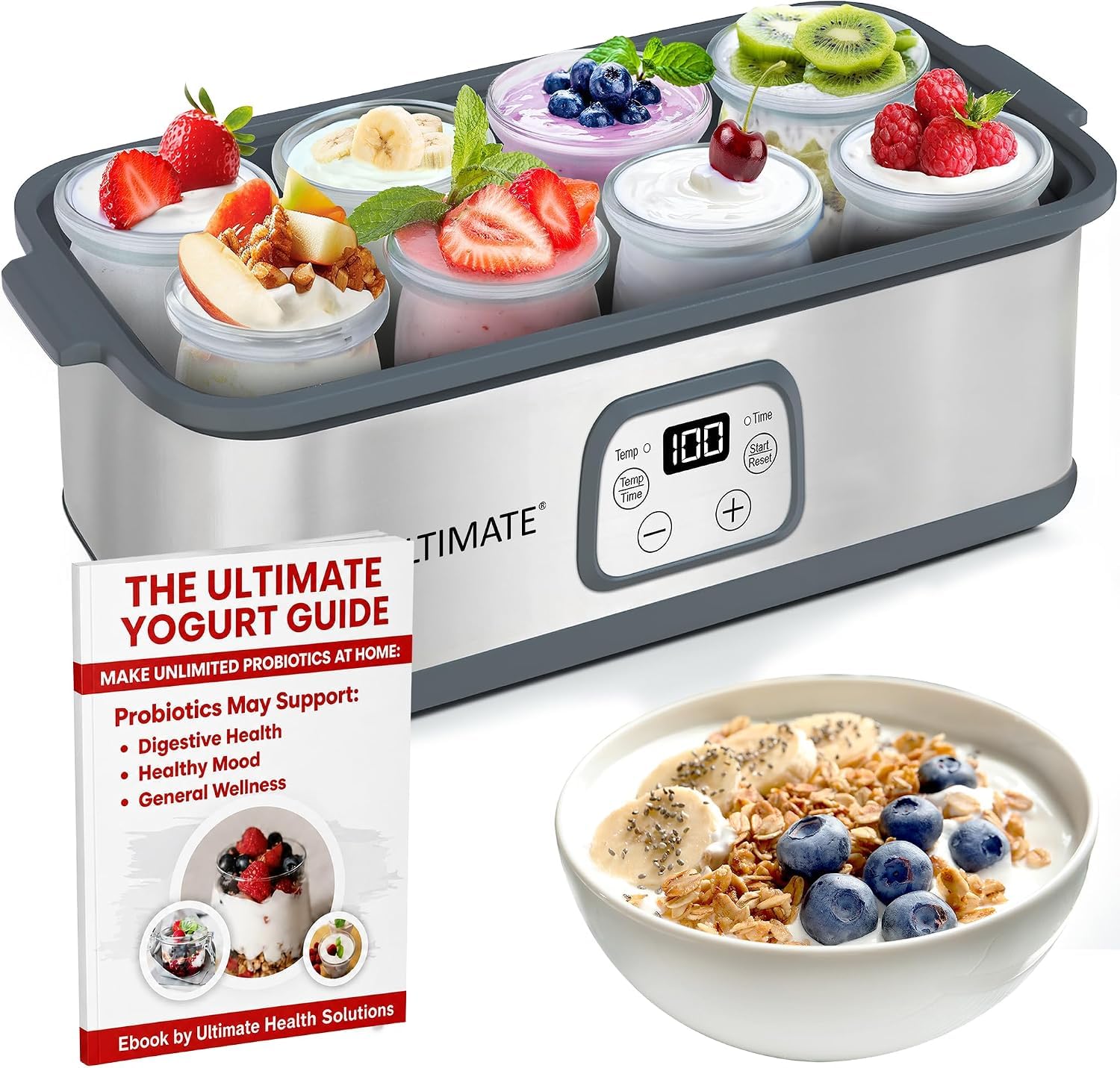
The appeal is straightforward: ferment a batch, save a few spoonfuls, and use that as the starter for the next round. Buyers describe getting consistent results once they dial in their process, though a handful mention the digital temperature readout running warmer than expected. That’s worth keeping in mind before trusting it blind with a finicky culture.
Bottom Line
The Ultimate Probiotic Yogurt Maker suits home cooks who want to experiment with specialty probiotic strains and don’t mind a bit of trial and error during the first batch or two. If building a reusable yogurt habit at home sounds worthwhile, this yogurt maker is available here.
Ultimate Probiotic Yogurt Maker: Why Consider It?
The Ultimate Probiotic Yogurt Maker earns its spot on a kitchen counter by handling fermentation jobs that standard yogurt makers skip. Many basic machines run a single fixed temperature for a few hours, fine for commercial starter packets but too short and too hot for slower-growing probiotic strains.
This machine adjusts from 68°F to 131°F and runs up to 48 hours, which matters if a recipe calls for a long, low, steady ferment. That range also opens the door to other fermented foods beyond yogurt, since the controls aren’t locked to one preset.
Who Is It Best For?
This machine fits home cooks already comfortable experimenting with starter cultures rather than beginners wanting a one-button appliance. Anyone following a specific protocol, like a SIBO-friendly yogurt or a strain-specific probiotic culture, benefits most from the extended run time and adjustable range.
Casual yogurt eaters who just want a quick batch from a store packet might find the learning curve unnecessary. Families feeding several people daily should also check jar capacity closely before buying, since portion sizes shrink fast with a houseful of yogurt fans.
Adjustable Temperature and 48-Hour Fermentation
The headline feature here is control: a dial-in range from 68°F to 131°F paired with run times stretching to two full days. That combination lets cooks match conditions to whatever culture they’re using instead of hoping a fixed-temperature machine happens to land in the right zone.
Longer ferments tend to produce a tangier, thicker yogurt, and some probiotic strains need that extended time to multiply properly. A machine capped at four or six hours simply can’t deliver that, which is the main reason dedicated probiotic yogurt makers exist at all.
How Reliable Is the Temperature in Practice?
Reports on accuracy are mixed, and that inconsistency is worth taking seriously. Several buyers mention the unit running close to its setting, with one noting a shift of roughly a degree above the selection, something they considered acceptable for their purposes.
Others describe a bigger gap, including one account of a 99°F setting producing results consistent with 113°F, which reportedly ruined a batch of L. reuteri yogurt. A separate reviewer who compared this machine against a budget import found it held a steadier temperature by comparison over multiple hours of testing with a thermometer.
Given that spread, a cheap kitchen thermometer as a cross-check during the first few batches seems like a reasonable precaution, especially for temperature-sensitive strains.
Reusable Starters and Homemade Batch Costs
Reusing a portion of each batch as the starter for the next is the main cost-saving draw of this machine. Instead of buying fresh probiotic capsules or starter packets every time, a spoonful of finished yogurt can, in many cases, seed the following batch.
Over several rounds, that lowers the per-batch cost compared to constantly repurchasing specialty probiotics, though results depend on keeping the culture healthy and uncontaminated. Buyers mention using this method successfully across multiple consecutive batches with good texture and flavor.
What Do You Need for Your First Batch?
A first batch requires a milk of choice, a starter culture (either a probiotic capsule, powder, or a small amount of existing yogurt), and the machine’s jars. Basic steps typically look like this:
- Heat milk if using a raw or unpasteurized source, then cool to the target fermentation temperature
- Whisk in the starter culture thoroughly
- Pour into the provided jars and set the machine to the desired temperature and run time
- Let it ferment undisturbed for the recommended hours, checking thickness near the end
- Refrigerate before eating to stop fermentation and let it set further
One detail worth confirming before buying: product listings differ on what’s included, with some references mentioning two large glass containers and others listing eight smaller 6-ounce jars. Checking current listing photos and the box contents on arrival avoids any surprise.
Pros and Cons
Weighing this machine honestly means looking past the marketing copy toward what buyers actually experience batch after batch.
Pros
- Wide adjustable temperature range suited to specialty probiotic strains
- Extended run time up to 48 hours for slow ferments
- Reusable starter approach can reduce long-term ingredient costs
- BPA-free construction on the housing and included lids
- Backed by a manufacturer warranty according to the listing
Cons
- Some units reportedly run several degrees warmer than the set temperature
- Price sits higher than basic yogurt makers without probiotic-specific features
- U.S.-standard plug reported as a problem for international buyers
- Jar count and size vary by listing, so confirming inclusions matters
Customer Reviews
Feedback lands mostly positive, with a well-rated average built from thousands of customer reviews, though a meaningful minority flag real issues worth weighing before purchase.
What Do Buyers Praise and Flag?
Satisfied buyers consistently mention better texture and flavor than store-bought yogurt, along with appreciation for controlling exactly what goes into each batch. Several describe successfully making SIBO-friendly cultured dairy and specialty probiotic yogurts that worked on the first or second try.
Recurring complaints center on three areas: temperature drift from the set point, a price point some consider steep next to basic yogurt makers, and the U.S.-only plug causing problems for one buyer outside the country. A couple of reviewers found the overall value underwhelming compared to the cost, while others felt the consistent results justified spending more than a basic model. Customer service responsiveness also comes up favorably in a few accounts.
Conclusion
Home cooks chasing specific probiotic strains and willing to tolerate a short learning curve are the best fit for this machine. The adjustable temperature range and long run time solve a real limitation of basic yogurt makers, even though some buyers report the actual temperature drifting from the display.
Checking jar count and plug compatibility before ordering avoids two of the more common frustrations mentioned in feedback. Keeping a separate thermometer handy for the first few batches offers a simple way to confirm the machine runs where it should before trusting it with a culture that took effort to source.